 Smoke 'Em
Clay Shooting Averages, Explained
Your average is the one number that follows you through this sport: targets broken divided by targets thrown. A 21/25 round is 84%. Twenty rounds of 84% is a shooter you can describe. But the headline number is also the least useful stat you own - the value is in how it breaks down.
What's "good" (honest version)
It depends on the game and the distance. Very roughly, at a typical club: new shooters live in the 40-60% range their first season, regular club shooters settle in the 70s and 80s, and serious competitors run low-to-mid 90s in trap singles and skeet - where perfect rounds are common enough at the top that averages compress into the high 90s. Sporting runs lower for everyone because courses change; compare sporting averages only against the same course.
The breakdowns that actually teach you something
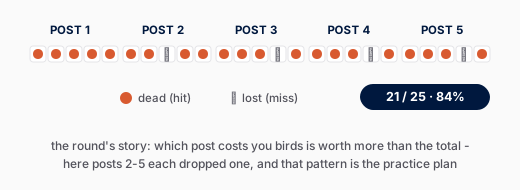
- By station or post - almost nobody misses evenly. A trap shooter breaking 85% overall might be 95% on post 3 and 70% on post 5. That gap is your practice plan.
- By event - singles, handicap, doubles, high house vs low house. Separate games, separate numbers.
- By conditions and gear - wind, light, choke, load. Patterns emerge fast once rounds are logged.
- Over time - the trend line matters more than any single round. Slumps look smaller and progress looks real when you can see six months at once.
Classes and competition
Leagues and sanctioning bodies - the ATA for trap, the NSSA and NSCA for skeet and sporting - group shooters into classes by average so you compete against your peers, not the club champion. In Smoke 'Em tournaments and leagues, your class is earned from officially scored event rounds - practice can't inflate it, and posted scores are sealed by the scorer.
Stop doing this math by hand
Smoke 'Em computes all of it the moment you save a round: per-event averages, a station heat map that turns your weak stands red and your money stand gold, streaks, personal bests, and one filter bar to slice any date range, club or season. Solo tracking is free forever. Start your average today.